Amazonian mushroom reveals the true story behind its name and scientific background
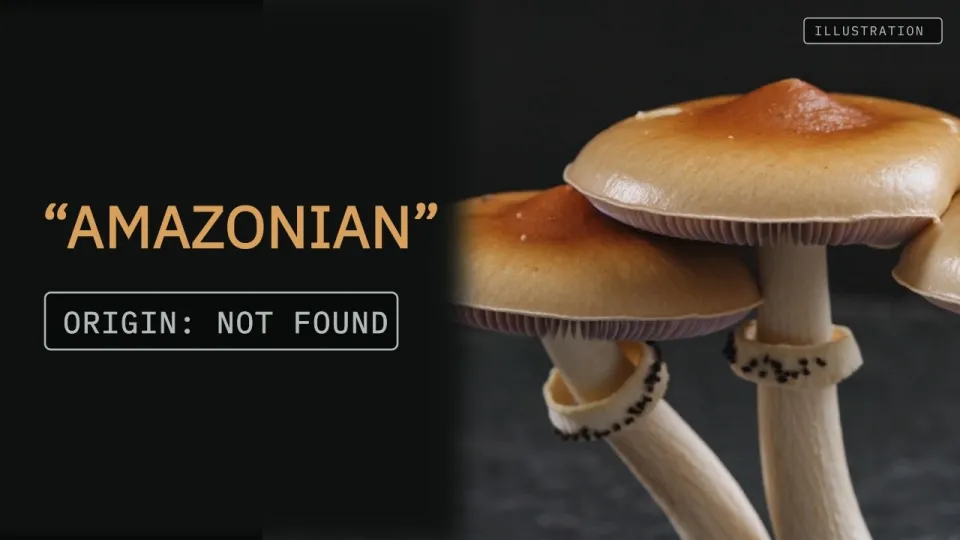
Video: Amazonian Mushroom: Following the Paper Trail Behind the Name
· based on the channel Shroomverse
Key takeaways
- The term 'Amazonian mushroom' refers to specific fungi found in the Amazon rainforest.
- Scientific naming of the mushroom has a complex history linked to early mycological papers.
- The mushroom was originally described under different genera and species names.
- Taxonomic revisions clarified its classification based on morphology and DNA evidence.
- Research traced the mushroom’s naming through historical scientific literature and field studies.
The Amazonian mushroom is a term used to describe certain mushroom species native to the Amazon rainforest. Its name carries a complex backstory involving scientific classification and historical literature. This article explores the origins and taxonomy behind the so-called Amazonian mushroom, revealing how its naming evolved through research and paper trails.
The origin of the Amazonian mushroom name
The name "Amazonian mushroom" initially emerged from early field studies in the Amazon region, where local fungi were collected and analyzed. These mushrooms were often referenced in scientific papers with varying names due to limited taxonomic knowledge at the time. The name broadly refers to fungi indigenous to the Amazon basin but lacks a single, universally accepted scientific species designation 02:15. This ambiguity in naming led scientists to follow a trail of historical documents to understand the mushroom’s true identity.
Tracing the scientific papers behind the mushroom’s name
The research involved reviewing multiple scientific publications that described mushrooms found in the Amazon. Early mycologists named these fungi under different genera such as Psilocybe and Stropharia, based on morphological features. Over time, detailed microscopic examinations and DNA sequencing prompted taxonomic revisions. For example, some mushrooms originally described as Psilocybe amazonicus were later reclassified to other genera after phylogenetic studies 05:40. This paper trail highlights how scientific names can change as new evidence emerges.
Morphology and DNA evidence in classification
Modern classification of the Amazonian mushroom relies heavily on morphology—such as cap shape, spore print color, and gill attachment—and molecular data. DNA sequencing of ribosomal RNA genes has become a key tool to confirm species boundaries and evolutionary relationships. These methods helped clarify confusion caused by earlier misidentifications and synonymized species names. Consequently, the Amazonian mushroom’s taxonomy was updated to reflect these genetic insights 08:50.
Importance of proper taxonomy for ecological and pharmacological studies
Accurate naming and classification of the Amazonian mushroom are crucial for ecological research and potential pharmacological applications. Different species may have distinct biochemical compounds with medicinal properties. Misidentification can lead to erroneous conclusions about a mushroom’s effects or ecological role. By following the historical and scientific paper trail, researchers ensure clarity in mushroom identification, which supports conservation and sustainable use initiatives 11:35.
Conclusion
Understanding the Amazonian mushroom’s name involves navigating through a complex history of scientific descriptions and taxonomic revisions. The mushroom’s classification has evolved from early morphological observations to modern DNA-based taxonomy. This detailed investigation, as presented by the Shroomverse channel, underscores the importance of rigorous scientific documentation in mycology. Such studies not only clarify nomenclature but also pave the way for further research into the ecological and medicinal potential of Amazonian fungi.
Questions & answers
What does the term Amazonian mushroom refer to?
It refers to certain mushroom species native to the Amazon rainforest, often studied for their unique characteristics and taxonomy.
Why has the classification of the Amazonian mushroom changed over time?
Early classifications were based on morphology alone, but advances in DNA sequencing and phylogenetics led to taxonomic revisions and more accurate species identification.
How does proper taxonomy impact scientific research on these mushrooms?
Accurate taxonomy is crucial to avoid misidentification, which can affect ecological studies and pharmacological research involving the mushrooms' biochemical properties.
What role did historical scientific papers play in understanding the Amazonian mushroom?
They provided the original descriptions and classifications, allowing researchers to trace naming changes and clarify the mushroom’s identity through a review of past literature.
Source: Amazonian Mushroom: Following the Paper Trail Behind the Name · Markdown version